How to Find Winning UGC Ad Concepts Before Launching Your Next Campaign
.webp)


Creating UGC ads isn't the difficult part.
Creating UGC ads that actually perform is.
Many brands spend thousands of dollars sending products to creators, paying creator fees, editing videos, and running ads,only to discover that the content doesn't resonate with their audience.
The good news is that you don't have to start every campaign from scratch.
Every successful UGC ad leaves behind clues.
The hook that grabbed attention. The creator angle that drove engagement. The storytelling format that kept viewers watching. The message that convinced someone to take action.
By researching competitor campaigns, brands can learn from content that's already working and use those insights to create stronger campaigns of their own.
In this guide, we'll show you how competitor research can help improve your UGC campaigns and how Bulba's Competitor Research feature makes the process easier.
Why Research Competitor Ads?
One of the biggest mistakes brands make is relying entirely on trial and error.
They brainstorm new concepts, test different creators, and launch campaigns hoping something works.
But your competitors may have already spent months testing similar ideas.
By researching successful campaigns in your industry, you can uncover:
- Proven ad concepts
- High-performing hooks
- Effective creator styles
- Popular content formats
- Emerging industry trends
Instead of guessing what your audience might respond to, you can learn from content that is already gaining traction.
The Traditional Way of Researching Competitors
Most brands conduct competitor research manually.
The process usually looks like this:
- Search competitors on TikTok or Instagram
- Scroll through dozens of videos
- Save content examples
- Take screenshots of ads
- Organize findings in spreadsheets
- Repeat for every competitor
While this approach can provide useful insights, it's incredibly time-consuming.
And by the time you've gathered enough examples, trends may have already shifted.
What Should You Look For?
Not every ad is worth analyzing.
When researching competitor campaigns, focus on patterns that appear repeatedly.
1. Strong Hooks
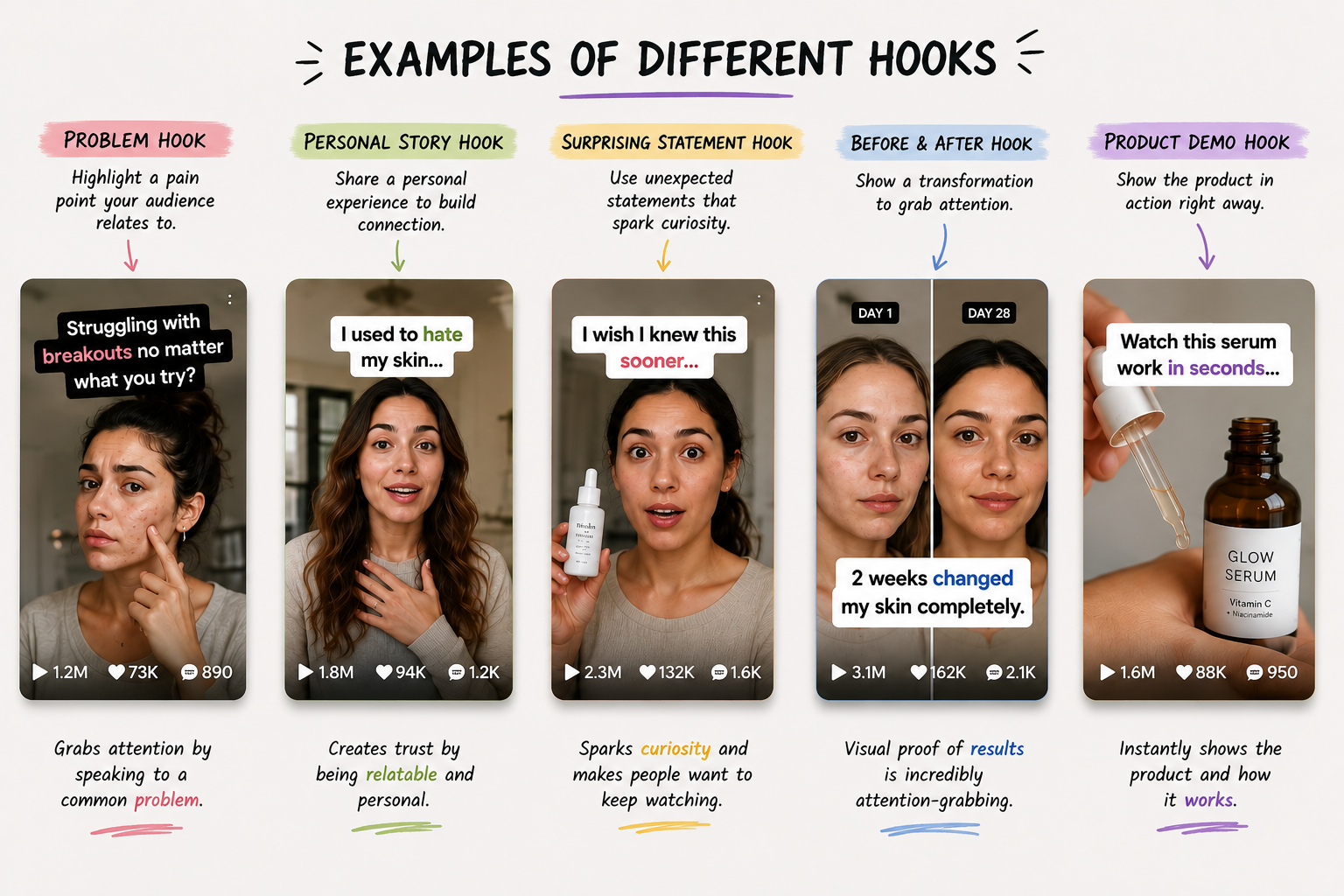
The first few seconds of a video are often the most important.
Pay attention to how creators capture attention.
Common examples include:
- Problem-focused openings
- Personal stories
- Surprising statements
- Before-and-after transformations
- Product demonstrations
If multiple successful ads use similar hooks, there's usually a reason.
2. Winning Creator Angles
Different creators tell stories differently.
Some focus on education.
Others focus on entertainment, personal experiences, or product reviews.
Understanding which creator angles appear most often can help shape your own campaign strategy.

3. Popular Content Formats
Certain formats consistently perform well across categories.
Examples include:
- Tutorials
- Product reviews
- GRWM videos
- Testimonials
- Product comparisons
- Day-in-the-life content
The more often a format appears in successful campaigns, the more attention it deserves.

4. Emerging Trends
Consumer behavior changes quickly.
Researching competitor campaigns can help you identify new content styles and creative trends before they become oversaturated.
This gives your brand a competitive advantage.

Meet Competitor Research
Competitor Research is Bulba's newest feature designed to help brands stop guessing and start building campaigns based on what already works.
Instead of brainstorming ad concepts from scratch, you can research competitor campaigns, uncover top-performing creator content, and instantly identify the creative angles driving results in your category.
From winning hooks to creator styles and content formats, Competitor Research helps you turn proven ideas into your next successful campaign.
Search Any Competitor
Simply enter the name of a competitor to instantly access their active creator ads and campaigns.
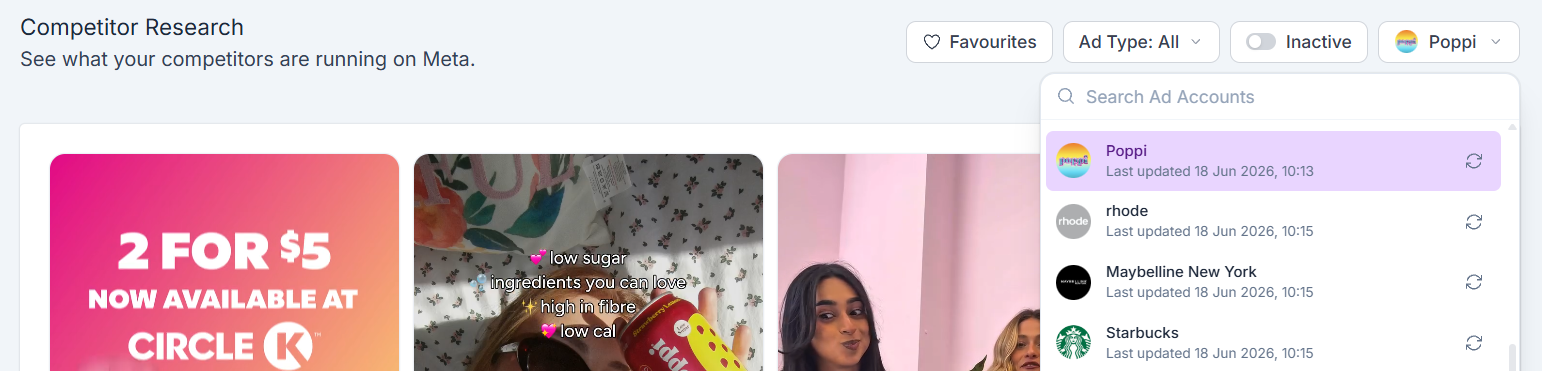
See exactly what content they're running, which creators they're working with, and how they're positioning their products.
This gives you immediate visibility into the strategies being tested across your market.
Discover What's Already Working
The fastest way to improve performance is to learn from campaigns that have already been tested.
.png)
Browse competitor ads and identify recurring patterns across successful campaigns:
- Creative formats
- Storytelling angles
- Product demonstrations
- Creator styles
- Calls-to-action
Instead of starting with a blank page, you can build on concepts that are already proven to resonate with consumers.
Find Winning Hooks
Most ads succeed or fail in the first few seconds.
Competitor Research helps you analyze the hooks competitors are using to capture attention and keep viewers watching.
You'll quickly spot patterns such as:
- Problem-solution openings
- Personal stories
- Product-first demonstrations
- Before-and-after transformations
- Curiosity-driven hooks
These insights help you create stronger briefs and more engaging content from day one.
Turn Competitor Ads Into Creator Briefs
Finding winning ads is only half the process.
The real advantage is turning those insights into campaigns.
When you find an ad concept you like, Bulba can instantly generate a campaign brief based on that creative direction.
The brief can then be shared with creators, allowing them to recreate the same style, format, hook, and storytelling structure for your brand.
Instead of spending hours writing creative instructions, you can go from competitor research to creator-ready campaign briefs in just one click.
Stay Ahead of Trends
The best brands don't wait for trends to become obvious.
By continuously monitoring competitor campaigns, you can spot emerging creative formats, creator styles, and messaging trends before they become saturated.
This allows your team to launch campaigns based on what's working now, not what worked six months ago.
Stop Guessing. Start Scaling.
Great UGC campaigns aren't built on luck.
They're built on research, proven creative concepts, and clear creator direction.
With Competitor Research, Bulba helps brands discover winning ads, understand why they work, and transform those insights into creator-ready campaigns in minutes.
How Brands Use Competitor Research
Brands use Competitor Research for a variety of reasons.
Creative Inspiration
Discover proven concepts before creating your next campaign.
Campaign Planning
Build stronger creator briefs using real-world examples.
Trend Analysis
Monitor changes in content styles and consumer preferences.
Competitive Research
Understand how brands in your category approach influencer and UGC marketing.
Faster Testing
Reduce guesswork by learning from content that's already performing well.
Learn From What Works
Competitor research isn't about copying content.
It's about understanding why certain content performs well.
When multiple brands succeed with similar hooks, storytelling formats, or creator approaches, they're revealing valuable information about what audiences respond to.
The goal is to take those insights and create content that feels authentic to your own brand.
Start Building Better UGC Campaigns
The best-performing campaigns aren't built on luck.
They're built on research.
Before launching your next creator campaign, take time to understand what's already working in your category.
With Bulba's Competitor Research feature, you can search competitors, uncover winning ad concepts, identify emerging trends, and build stronger campaigns with confidence.
Instead of guessing what might work, start with what already does.
Frequently Asked Questions
These should feel more educational and valuable rather than one-line answers. Here's a stronger version:
Why is competitor research important for UGC campaigns?
Creating UGC isn't the challenge, creating UGC that performs is.
Competitor research helps brands understand which hooks, creator styles, storytelling formats, and messaging angles are already resonating with consumers. By studying campaigns that are actively running in the market, brands can make more informed creative decisions and avoid starting every campaign from scratch.
Can competitor research improve campaign performance?
Competitor research can help brands make smarter creative decisions before launching a campaign.
By analyzing ads that competitors continue to invest in, brands can identify proven concepts, reduce creative guesswork, and build stronger campaign briefs. This often leads to more focused creator content and more efficient testing.
Can competitor research help new brands compete with larger companies?
Absolutely.
Large brands often have bigger budgets for creative testing. Competitor Research allows smaller teams to learn from those experiments and leverage proven concepts without spending months and thousands of dollars discovering them independently.
What can I learn from competitor campaigns?
Competitor campaigns provide valuable insight into what consumers are responding to right now.
You can uncover:
- Winning hooks and opening lines
- Popular creator styles
- High-performing content formats
- Product demonstration techniques
- Storytelling approaches
- Calls-to-action
- Emerging industry trends
These insights can help shape everything from creator briefs to overall campaign strategy.
How does Bulba's Competitor Research feature work?
Bulba's Competitor Research feature allows brands to search competitors and instantly explore the creator ads associated with their campaigns.
Instead of manually scrolling through ad libraries and social platforms, brands can quickly identify winning creative concepts, analyze successful creator content, and discover patterns across multiple campaigns.
When you find an ad concept that aligns with your goals, Bulba can even generate a creator-ready campaign brief based on that creative direction, helping you move from research to campaign execution in just a few clicks.